
Yangon Travel Guide ရန်ကုန်
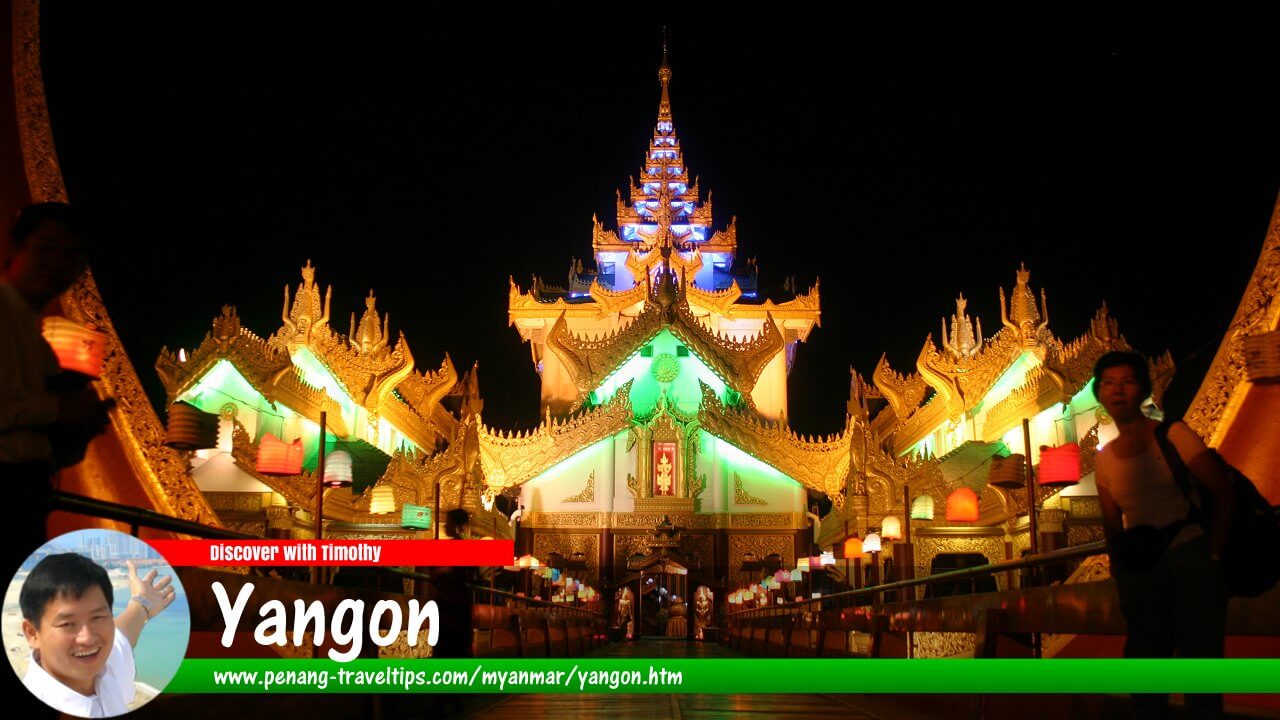 Yangon (20 November 2003)
Also available: Yangon (Malay Edition)
Yangon (ရန်ကုန်) is the largest city in Myanmar and the country’s most important commercial and cultural centre. Formerly known as Rangoon, the city combines colonial-era architecture, bustling markets, diverse communities and some of Myanmar’s most revered religious landmarks. Although it ceased to be the national capital when the government moved to Nay Pyi Taw in 2005, Yangon remains the main gateway for international visitors and continues to play a central role in Myanmar’s economy, culture and tourism.
Located in southern Myanmar near the Yangon River, the city developed as a major port and trading centre. Its history as a royal city, colonial capital and modern metropolis has left behind a unique mix of Burmese traditions, British colonial buildings, Chinese and Indian influences, and vibrant local neighbourhoods. For visitors, Yangon offers an introduction to Myanmar’s history, food, architecture and everyday life.
Quick Facts
- Country: Myanmar
- Location: Southern Myanmar, near the Yangon River and Gulf of Martaban
- Status: Largest city and former capital of Myanmar
- Administrative division: Yangon Region
- Local authority: Yangon City Development Committee (YCDC)
- Population: Over 5 million people in the metropolitan area
- Language: Burmese (Myanmar language), with English used in many tourist establishments
- Currency: Myanmar Kyat (MMK)
- Time zone: Myanmar Standard Time (UTC+6:30)
- Main airport: Yangon International Airport (RGN)
- Main railway station: Yangon Central Railway Station
- Known for: Shwedagon Pagoda, colonial heritage buildings, markets, museums and Burmese cuisine
- Best time to visit: November to February, when the weather is generally cooler and drier
Geography
Yangon is located in southern Myanmar, in the Yangon Region, near the confluence of the Yangon River and Bago River before they flow into the Gulf of Martaban, an arm of the Andaman Sea. Its strategic location near the coast and waterways has shaped Yangon’s development as Myanmar’s most important commercial and transport hub.
The city lies within the lower Ayeyarwady Delta region, an area characterised by fertile plains, numerous rivers and waterways. Unlike the mountainous regions found in northern and eastern Myanmar, Yangon is situated on relatively flat terrain, making it suitable for urban expansion, agriculture and port development.
Location and Surroundings
Yangon is situated approximately 30 kilometres from the coast and about 590 kilometres south of Mandalay by road. The city serves as the main urban centre of southern Myanmar and provides access to many destinations in the surrounding delta region.
The Yangon River has historically been central to the city’s growth. It provided a natural route for trade and transportation, allowing Yangon to develop into a major river port during both the Burmese kingdom period and the British colonial era.
Yangon River and Port
The Yangon River is a tidal waterway that connects the city with the sea through the Gulf of Martaban. The river has played a significant role in the movement of goods, people and cultural influences throughout Yangon’s history.
During the British colonial period, the development of the port transformed Yangon into one of the most important trading centres in Southeast Asia. Rice exports, in particular, contributed significantly to the city’s economic growth, as Myanmar became one of the world’s major rice-producing regions during that era.
Today, the port remains an important part of Myanmar’s transport infrastructure, handling cargo and supporting the country’s trade activities.
Climate
Yangon has a tropical monsoon climate, with three main seasons: the cool and dry season, the hot season and the rainy season.
- Cool and dry season (November to February): This is generally considered the most comfortable period to visit Yangon, with lower humidity and less rainfall.
- Hot season (March to May): Temperatures rise significantly, and visitors may find outdoor sightseeing more demanding, especially during midday.
- Rainy season (June to October): Yangon receives heavy monsoon rainfall, although showers are often interspersed with periods of clear weather.
The tropical climate influences daily life in Yangon. Visitors should prepare for warm temperatures throughout much of the year, wear suitable clothing and stay hydrated when exploring outdoor attractions.
Urban Development
Yangon’s geography has influenced the way the city has expanded. The historic downtown area developed near the river and port, while newer residential and commercial districts spread further inland as the population grew.
The city’s low-lying landscape, combined with its growing urban population, creates challenges such as traffic congestion, drainage management and pressure on infrastructure. At the same time, Yangon’s location continues to make it Myanmar’s most internationally connected city.
Natural Environment
Although Yangon is a major urban centre, the city is surrounded by areas of greenery, lakes and waterways. Parks and lakes such as Kandawgyi Lake provide recreational spaces within the city, while the surrounding delta region supports agriculture and traditional rural communities.
The interaction between rivers, wetlands and urban development has shaped Yangon’s identity. For visitors, understanding this geography provides a better appreciation of why Yangon became the gateway city of Myanmar.
History
Yangon has a long history that reflects the changing fortunes of Myanmar itself. From its origins as a small settlement known as Dagon, it developed into a royal city, a colonial port, the capital of independent Myanmar and eventually the country’s largest commercial centre.
The city’s history can still be seen in its religious monuments, colonial architecture, markets and diverse communities. Understanding Yangon’s past helps visitors appreciate why the city has such a distinctive character today.
Early History as Dagon
Before becoming Yangon, the area was known as Dagon, a settlement associated with the ancient Shwedagon Pagoda. The site was originally developed by the Mon people, one of the earliest civilisations in the region, who established important cultural and religious centres in southern Myanmar.
The presence of the Shwedagon Pagoda made Dagon a significant place of pilgrimage. Over time, the settlement grew in importance as a religious centre, even though it remained smaller than other major cities of the Burmese kingdoms.
Konbaung Dynasty and the Birth of Yangon
In 1755, King Alaungpaya, founder of the Konbaung Dynasty, captured Dagon during his campaign to reunify Myanmar. He renamed the settlement Yangon, a name commonly interpreted as meaning “end of strife” or “end of conflict”.
Under the Konbaung Dynasty, Yangon became an important port because of its access to waterways leading to the sea. However, the royal capital remained elsewhere, particularly at cities such as Ava and later Amarapura and Mandalay.
British Colonial Period
The history of Yangon changed dramatically after the First Anglo-Burmese War (1824–1826), when the British gained control of parts of southern Myanmar, including the Yangon area. Following the Second Anglo-Burmese War in 1852, the British took control of Lower Myanmar, and Yangon became the centre of British administration.
Under British rule, Yangon was developed into a major colonial port and was renamed Rangoon. The British redesigned parts of the city with a planned grid layout, wide streets, administrative buildings and commercial districts.
During this period, Rangoon became one of the most important ports in the British Empire in Asia. The city attracted migrants from different parts of the region, including Indians, Chinese and other communities, creating the multicultural society that remains one of Yangon’s defining characteristics today.
Rangoon as a Colonial Capital
By the late 19th and early 20th centuries, Rangoon had become the capital of British Burma and a centre of trade, education and political activity. The city’s population grew rapidly, and many buildings constructed during this period still survive in the downtown area.
Colonial-era structures such as government offices, banks, hotels and commercial buildings remain important architectural landmarks. Today, Yangon has one of the largest collections of surviving colonial buildings in Southeast Asia.
World War II and Independence
During World War II, Rangoon was occupied by Japanese forces in 1942 before being recaptured by Allied forces in 1945. The war caused significant disruption to the city and its infrastructure.
Myanmar gained independence from Britain on 4 January 1948, and Rangoon became the capital of the newly independent nation. The city continued to serve as the political, economic and cultural centre of Myanmar for decades.
From Rangoon to Yangon
In 1989, the government officially changed the English spelling of the city’s name from Rangoon to Yangon, following a broader change in the English names of many places in Myanmar.
The city remained the capital of Myanmar until 2005, when the government moved the administrative capital to Nay Pyi Taw. Despite losing its official capital status, Yangon continues to be Myanmar’s largest city and its main economic centre.
Yangon Today
Modern Yangon represents the many layers of Myanmar’s history. Ancient Buddhist traditions exist alongside colonial heritage buildings, modern businesses and communities with roots in different parts of Asia.
For visitors, exploring Yangon is not only about seeing individual attractions, but also about experiencing a city shaped by centuries of cultural exchange, trade and historical change.
Administrative Division and City Layout
Yangon is located within Yangon Region, one of Myanmar’s seven regions and seven states. Although Yangon Region includes both urban and rural areas, the city of Yangon itself is the country’s largest urban centre and the focus of most visitors arriving in Myanmar.
The administration of Yangon is managed by the Yangon City Development Committee (YCDC), which is responsible for various municipal functions including urban planning, infrastructure, public services and city development.
Yangon Region
Yangon Region covers the Yangon metropolitan area and surrounding townships. It is one of the most economically important areas of Myanmar due to its concentration of businesses, industries, financial institutions and transport facilities.
The region includes the city of Yangon as well as suburban and rural areas extending beyond the main urban districts. For visitors, the most relevant area is Yangon City, where the majority of hotels, restaurants, attractions and transport connections are located.
Yangon City Development Committee (YCDC)
The Yangon City Development Committee is the local administrative authority responsible for managing Yangon city. Unlike many cities around the world that are governed by a single municipal council, Yangon has a unique administrative structure under Myanmar’s local government system.
YCDC oversees matters such as roads, urban development, sanitation, public markets, parks and other municipal services. Its role is important in maintaining Yangon’s historic areas while managing the challenges of a rapidly growing city.
Townships of Yangon
Yangon is divided into 33 townships, each with its own character and identity. These townships form the building blocks of the city and help visitors understand the different areas of Yangon.
The central districts are generally the most visited because they contain the largest concentration of historic buildings, markets, hotels and cultural attractions. Other townships are mainly residential or commercial areas, although some contain important landmarks.
Downtown Yangon
Downtown Yangon is the historic heart of the city. Developed during the British colonial period, it is characterised by a grid layout, wide streets and a remarkable collection of colonial-era buildings.
This area is popular with visitors because many attractions can be explored on foot. It also offers a lively mix of markets, restaurants, tea shops, street food stalls and traditional neighbourhoods.
Bahan Township
Bahan is one of Yangon’s more prominent areas and is known for important cultural and religious landmarks. The township has a quieter atmosphere compared with the busy downtown area and contains several diplomatic residences, schools and upscale neighbourhoods.
Many visitors choose to stay in or near Bahan because of its proximity to major attractions while offering a more relaxed environment.
Dagon Township
Dagon is one of Yangon’s historic townships and is closely associated with the city’s cultural heritage. The area contains important institutions, museums and religious landmarks that reflect Yangon’s historical importance.
Its central location makes it convenient for visitors exploring the older parts of the city.
Chinatown Area
Yangon’s Chinatown, located mainly around the downtown area, is one of the city’s most vibrant neighbourhoods. It developed from the Chinese community that became established during Yangon’s growth as a colonial trading port.
The area is known for its food stalls, markets, traditional shops and lively street atmosphere, especially in the evening when local residents gather for meals and social activities.
Insein Township
Insein is a township located in the northern part of Yangon and is known for its large residential areas and transport connections. It is less visited by short-term tourists but forms an important part of the wider Yangon urban area.
The township is connected to the city centre by road and rail networks, including the Yangon Circular Railway route.
Yangon’s Urban Character
Yangon’s neighbourhoods reflect the city’s layered history. Colonial-era districts, traditional markets, religious sites, modern commercial zones and residential communities exist side by side.
For visitors, understanding the city layout makes travelling around Yangon easier. While many major attractions are concentrated in central areas, exploring beyond the city centre provides a glimpse of everyday life in Myanmar’s largest city.
Getting to Yangon
Yangon is the main international gateway to Myanmar and is the arrival point for many visitors entering the country. The city is connected to other parts of Myanmar by air, rail and road, making it the most convenient starting point for exploring the country.
Most international visitors arrive by air at Yangon International Airport, while domestic travellers may also reach Yangon by train, bus or private vehicle from other cities.
By Air
Yangon International Airport is the main airport serving Yangon and one of Myanmar’s principal international gateways. The airport handles international and domestic flights, connecting Yangon with cities in Asia as well as destinations within Myanmar.
The airport is located in Mingaladon Township, approximately 15 kilometres north of central Yangon. The journey between the airport and downtown Yangon usually takes around 30 minutes to more than an hour, depending on traffic conditions.
Visitors arriving at Yangon International Airport can reach the city centre by taxi, airport shuttle services or private transfers arranged through hotels and travel companies.
Arriving by Taxi from Yangon International Airport
Taxis are the most common transport option for visitors arriving at Yangon International Airport. Airport taxi services are available at the arrival area, and passengers should confirm the fare or booking arrangement before beginning the journey.
Because Yangon experiences significant traffic congestion, especially during peak hours, visitors should allow extra travel time when travelling between the airport and their accommodation.
By Train
Yangon Central Railway Station is the main railway station serving the city and is one of Myanmar’s most important railway hubs. Located in the city centre, the station connects Yangon with destinations throughout the country.
Railway services from Yangon connect to cities including Mandalay and other parts of Myanmar. Although train journeys are generally slower than travelling by air or road, they offer visitors an opportunity to experience local life and observe landscapes beyond the major cities.
The station’s central location also makes it convenient for travellers staying in downtown Yangon.
By Bus
Long-distance buses connect Yangon with many cities and towns throughout Myanmar. Bus travel is a common method of transport for local residents and budget-conscious travellers.
Most long-distance buses do not depart from the city centre. Instead, they operate from major bus terminals located outside the downtown area. Visitors should allow sufficient time to reach these terminals, especially during periods of heavy traffic.
Popular routes include connections between Yangon and major destinations such as Mandalay, Bagan and other regions of Myanmar.
By Road
Yangon is connected by road to other parts of Myanmar through a network of highways. Private cars, taxis with drivers and tour vehicles are commonly used by visitors who prefer greater flexibility.
However, travel times by road can vary significantly depending on distance, road conditions, weather and traffic. Long-distance journeys that appear short on a map may take considerably longer than expected.
By River
Yangon’s location beside the Yangon River has historically made it an important river port. During earlier periods, river transport played a major role in connecting the city with other parts of Myanmar.
Today, river travel is less commonly used by international visitors arriving in Yangon, although the waterways remain important for trade and local transportation.
Travelling from Yangon to Other Destinations
Many visitors use Yangon as the starting point for exploring Myanmar. Domestic flights, trains and buses connect Yangon with major destinations including Mandalay, Bagan, Inle Lake and other regions.
For travellers with limited time, domestic flights are the fastest option for reaching distant destinations. Those with more time may prefer trains, buses or private transport to experience more of Myanmar’s countryside.
Getting Around Yangon
Yangon is a large city with attractions, hotels, restaurants and commercial areas spread across different districts. While some central areas can be explored on foot, visitors will usually need taxis or other forms of transport to move between neighbourhoods.
The city does not currently have an urban rail transit system such as a metro or light rail network. However, visitors have several transport options, including taxis, buses, trains and private vehicles.
Taxi
Taxis are the most convenient form of transport for many visitors in Yangon. They are widely available and relatively affordable compared with many major cities in the region.
Visitors can use taxis to travel between attractions, hotels, restaurants and transport terminals. It is advisable to confirm the destination clearly before starting the journey, as many street names and locations may be unfamiliar to first-time visitors.
Ride-hailing services may also be available in Yangon, offering visitors an alternative way to book transport through mobile applications.
Yangon Bus Service
The Yangon Bus Service (YBS) operates public buses throughout the city and serves as an important transport system for local residents.
While buses are an economical way to travel, they may be challenging for visitors who are unfamiliar with the routes, language and ticketing system. Travellers with limited time may find taxis more practical, especially when carrying luggage.
Yangon Circular Railway
The Yangon Circular Railway is one of the city’s most distinctive transport experiences. The railway operates a circular route around Yangon, connecting suburban areas with the city centre.
The journey is slow compared with modern urban transport systems, but it provides visitors with an opportunity to observe everyday life in Yangon, including local markets, neighbourhoods and rural landscapes on the outskirts of the city.
For travellers interested in local culture rather than simply getting from one place to another, the Circular Railway offers a memorable experience.
Walking
Walking is one of the best ways to experience central Yangon, especially the downtown area. The grid layout of the colonial city makes it relatively easy to explore streets lined with historic buildings, markets and local businesses.
Visitors who walk around Yangon can discover details that may be missed when travelling by vehicle, including traditional shops, street food stalls and neighbourhood life.
However, pedestrians should be prepared for hot weather, uneven pavements in some areas and heavy traffic when crossing roads.
Private Car and Driver
Hiring a private car with a driver can be a practical option for visitors who wish to explore multiple locations in a single day or travel outside the city centre.
This option is particularly useful for families, groups, older travellers or visitors planning day trips around the Yangon area.
Where to Stay in Yangon
Yangon offers a wide range of accommodation, from budget guesthouses to international hotels. The best area to stay depends on the visitor’s interests, travel style and planned activities.
Downtown Yangon
Downtown Yangon is the most convenient area for first-time visitors who want to experience the historic heart of the city. It is close to colonial buildings, markets, restaurants, street food areas and several major attractions.
The area has a lively atmosphere, with activity throughout the day and evening. Visitors who enjoy exploring on foot may find downtown Yangon the most suitable location.
Bahan Township
Bahan is a popular accommodation area for visitors who prefer a quieter environment while remaining close to important attractions. The township is known for its proximity to cultural landmarks and several higher-end hotels.
It is a good choice for travellers who want comfort and convenience without staying in the busiest parts of downtown.
Chinatown and Surrounding Downtown Areas
The Chinatown area offers a more local atmosphere, with food stalls, markets and traditional shops. It is particularly attractive to visitors interested in street food and evening activities.
The area also provides easy access to downtown attractions and public transport connections.
Near Yangon International Airport
Accommodation near Yangon International Airport is convenient for travellers with early morning flights, late arrivals or short stopovers.
However, the airport area is considerably farther from the historic centre, so it may not be the best choice for visitors who want to spend their time exploring Yangon’s main attractions.
Choosing the Best Area to Stay
For first-time visitors, downtown Yangon is usually the most practical choice because of its central location and easy access to historic areas. Travellers seeking a quieter environment may prefer Bahan, while those with short stays focused on flights may consider accommodation near the airport.
When selecting accommodation, visitors should consider not only the hotel itself but also travel time to the places they plan to visit, as Yangon’s traffic can significantly affect journey times.
What to Eat in Yangon
Yangon is one of the best places to experience Myanmar cuisine, offering a wide variety of traditional dishes, street food, tea shops and restaurants. The city’s food culture reflects its diverse history, with Burmese flavours combined with influences from Indian, Chinese, Mon and other regional cuisines.
For visitors, exploring Yangon’s food scene is an opportunity to experience everyday life in Myanmar. Local meals are often centred around rice, curries, soups, salads and a variety of side dishes that are shared among diners.
Mohinga
Mohinga is widely regarded as Myanmar’s national dish. It is a rice noodle soup traditionally eaten for breakfast, although it is available throughout the day at many eateries in Yangon.
The dish consists of rice noodles served in a flavourful fish-based broth, commonly prepared with ingredients such as lemongrass, ginger, onions and chickpea flour. Different regions of Myanmar may prepare mohinga slightly differently.
Lahpet Thoke (Tea Leaf Salad)
Lahpet thoke is one of Myanmar’s most distinctive dishes. It is a salad made with fermented tea leaves mixed with ingredients such as cabbage, tomatoes, beans, nuts and seeds.
The combination of savoury, sour and slightly bitter flavours makes it a unique dish that many visitors remember after visiting Myanmar.
Shan Noodles
Shan noodles originated from Shan State in eastern Myanmar but have become popular throughout the country, including Yangon. The dish usually consists of rice noodles served with chicken or pork, tomato-based sauce and fresh garnishes.
It is a popular choice for visitors who want to try a lighter local meal with regional roots.
Burmese Curries
Burmese meals often feature curries served together with rice and a selection of side dishes. Unlike some neighbouring cuisines, Burmese curries tend to use more subtle spices while allowing the natural flavours of meat, fish or vegetables to remain prominent.
Visitors will find a wide range of curries, including chicken, pork, fish and vegetarian options, in traditional Burmese restaurants throughout Yangon.
Tea Shops
Tea shops are an important part of Yangon’s social culture. They serve as informal gathering places where people meet, chat and enjoy tea together.
Many tea shops serve Burmese milk tea, snacks, noodles and simple meals. For visitors, spending time at a local tea shop is one of the easiest ways to observe everyday life in Yangon.
Street Food
Yangon’s streets offer a variety of affordable local snacks and meals. Evening food stalls are especially popular, with vendors selling noodles, grilled items, traditional sweets and fresh drinks.
Visitors exploring street food areas should choose stalls with good hygiene practices and high customer turnover, as busy stalls often indicate fresh preparation.
Where to Eat in Yangon
Yangon offers dining options ranging from simple local eateries to international restaurants. The best places to eat depend on whether visitors are looking for traditional Burmese food, street food experiences or more familiar international cuisine.
Local Burmese Restaurants
Traditional Burmese restaurants are ideal for visitors who want to sample a variety of Myanmar dishes in one meal. Many restaurants serve set meals with rice, curry, soup and several side dishes.
These restaurants are especially suitable for visitors travelling in groups, as Burmese dining culture often involves sharing several dishes at the table.
Markets and Street Food Areas
Markets and busy neighbourhood streets are excellent places to discover local food at affordable prices. Visitors can find traditional snacks, fresh produce, noodles and regional specialities.
Exploring food markets also provides an opportunity to experience the daily rhythm of Yangon beyond the main tourist attractions.
International Restaurants
As Myanmar’s largest city and commercial centre, Yangon has a wide range of international dining options. Visitors can find Chinese, Indian, Thai, Japanese, Korean and Western restaurants, especially in central and commercial districts.
These choices reflect Yangon’s multicultural population and its long history as a trading city.
Halal Food in Yangon
Yangon has a long-established Muslim community, and halal food is available in several parts of the city. Visitors looking for halal meals will generally find more choices in Yangon than in smaller towns and rural destinations.
Halal restaurants, Indian Muslim eateries and some traditional food establishments cater to both local residents and visitors. Muslim travellers are advised to confirm halal status with the restaurant before dining, as practices and certification may vary.
Food Safety Tips
Visitors can enjoy Yangon’s diverse food culture by taking sensible precautions. Choose restaurants and food stalls that appear clean, have regular customers and prepare food fresh.
Travellers should also take care when consuming raw foods, unwashed produce or unfamiliar dishes, especially during the hotter months.
Places of Interest in Yangon
Yangon offers visitors a wide variety of attractions that reflect the city’s religious heritage, colonial history, cultural diversity and everyday life. While the city is best known for its magnificent pagodas, it also contains historic neighbourhoods, museums, markets, lakes and architectural landmarks.
Many of Yangon’s major attractions are located within the central and older parts of the city, making them accessible for visitors staying in downtown areas. Exploring Yangon is not only about visiting individual landmarks, but also about experiencing the atmosphere of a city shaped by centuries of history.
Shwedagon Pagoda
The Shwedagon Pagoda is Yangon’s most famous landmark and one of the most important Buddhist sites in Myanmar. Located on Singuttara Hill, the golden stupa dominates the city skyline and is an important place of worship for Buddhists from Myanmar and around the world.
The pagoda complex is renowned for its religious significance, architectural beauty and the atmosphere created by thousands of worshippers, monks and visitors who gather there.
Sule Pagoda
Sule Pagoda is a distinctive landmark located in the heart of downtown Yangon. Unlike many religious monuments that stand apart from urban areas, Sule Pagoda is surrounded by busy streets, colonial buildings and commercial activity.
Its central location makes it an important reference point when exploring downtown Yangon.
Bogyoke Aung San Market
Bogyoke Aung San Market is one of Yangon’s best-known shopping destinations. Established during the colonial period, the market is popular with visitors looking for traditional handicrafts, jewellery, textiles, artwork and souvenirs.
The market also provides an opportunity to observe local commerce and Myanmar’s traditional crafts.
Yangon’s Colonial Heritage Buildings
Downtown Yangon contains one of the largest collections of surviving colonial-era buildings in Southeast Asia. These structures reflect the city’s importance as the capital of British Burma and a major trading port.
Visitors interested in architecture and history can explore streets lined with former government offices, banks, hotels and commercial buildings that showcase Yangon’s colonial past.
Kandawgyi Lake
Kandawgyi Lake is a scenic urban lake located near some of Yangon’s most important landmarks. The area provides visitors with a quieter environment away from the busy city streets and offers views of the surrounding landscape.
The lake area is popular for leisurely walks, photography and enjoying views of the Shwedagon Pagoda.
National Museum of Myanmar
The National Museum of Myanmar in Yangon houses collections related to Myanmar’s history, culture, art and royal traditions. It provides visitors with useful background before exploring the country’s historical sites.
The museum is particularly valuable for those interested in understanding Myanmar’s ethnic diversity, traditional arts and royal heritage.
Chauk Htat Gyi Buddha and Other Religious Sites
Yangon contains many important Buddhist monuments beyond the famous Shwedagon Pagoda. Sites such as the Chauk Htat Gyi Buddha Image and other monasteries provide visitors with opportunities to experience Myanmar’s Buddhist traditions.
These religious sites also reflect the importance of Buddhism in the daily life and cultural identity of Yangon.
Yangon Circular Railway
The Yangon Circular Railway is both a transport service and a cultural experience. A journey on the railway allows visitors to observe local communities, markets and suburban landscapes beyond the main tourist areas.
For travellers interested in everyday life, the Circular Railway provides a different perspective of Yangon.
Best Time to Visit Yangon
The best time to visit Yangon is generally from November to February, when temperatures are cooler, humidity is lower and rainfall is limited. This period is usually the most comfortable for sightseeing and outdoor activities.
Cool and Dry Season (November to February)
This is considered the peak travel season for Yangon. The weather is more pleasant, making it suitable for exploring pagodas, markets, historic streets and outdoor attractions.
Hot Season (March to May)
During the hot season, temperatures can become high, particularly in the afternoons. Visitors travelling during this period should plan outdoor activities during cooler parts of the day and stay well hydrated.
Rainy Season (June to October)
The monsoon season brings frequent rainfall to Yangon. Although rain may affect outdoor sightseeing, the city remains active and visitors may enjoy fewer crowds and greener surroundings.
Travel Conditions
Travel conditions can change. Visitors planning a trip to Yangon should check the latest information from official sources before travelling. Factors such as entry requirements, transport availability, local regulations and conditions in specific areas may change over time.
Travellers should ensure that they have the necessary travel documents, follow local laws and remain aware of current conditions during their visit.
References
- Encyclopaedia Britannica - Yangon
- Encyclopaedia Britannica - Myanmar
- Myanmar Ministry of Hotels and Tourism - Official Tourism Portal
- Government of Myanmar - Official Portal
- The Myanmar Times - Myanmar News and Information
- UNESCO World Heritage Centre - Bagan Archaeological Area
- Lonely Planet - Best Time to Visit Myanmar
- US Department of State - Myanmar Travel Advisory
- UK Foreign, Commonwealth & Development Office - Myanmar Travel Advice
