
Bago Travel Guide
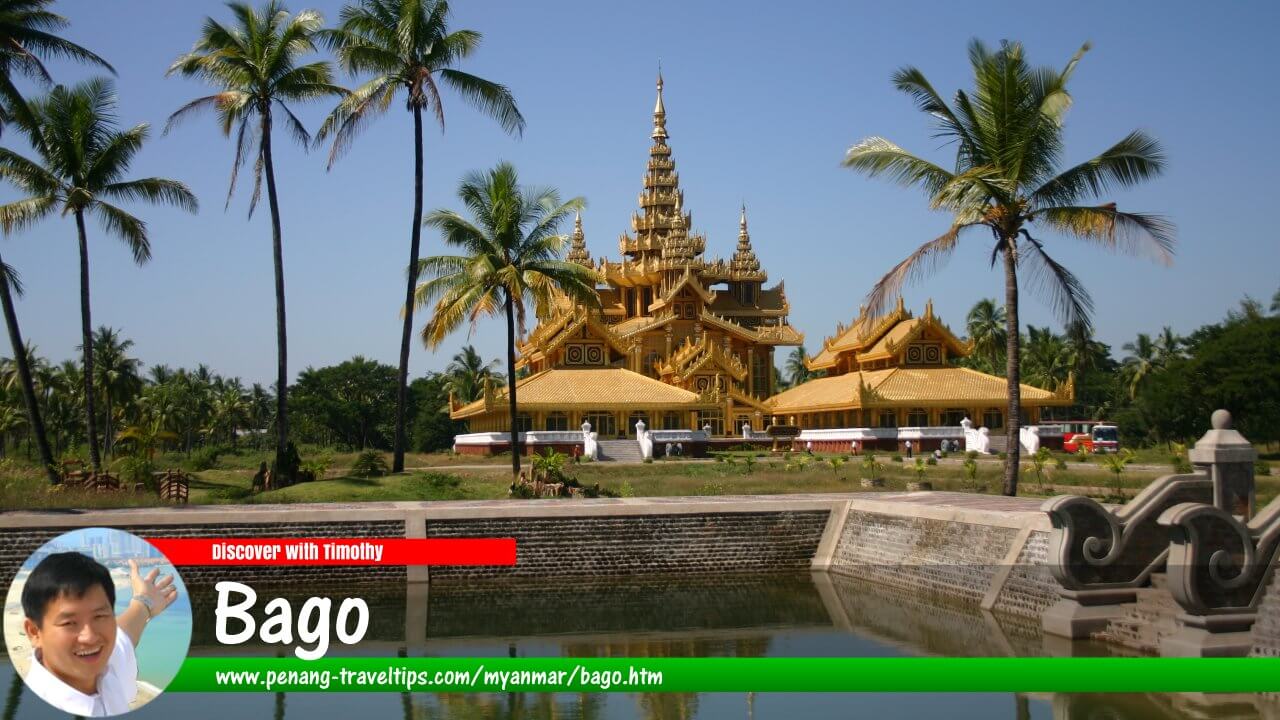 Bago (21 November 2003)
Also available: Bago (Malay Edition)
Introduction to Bago
Bago (ပဲခူး) is a historic city in Myanmar, located about 80 kilometres northeast of Yangon. Once the capital of the powerful Hanthawaddy Kingdom, Bago is today one of Myanmar's most important heritage destinations, known for its magnificent pagodas, ancient Buddhist monuments, royal history and Mon cultural influences.
Although many travellers visit Bago as a day trip from Yangon, the city has enough historical and cultural attractions to justify a longer stay. Its impressive religious monuments, traditional markets and connections to Myanmar's royal past provide visitors with a deeper understanding of the country's history beyond its better-known destinations.
The Burmese name of the city is written as ပဲခူး and pronounced approximately as "Bago". During the colonial period, the city was commonly known by its English name Pegu. After Myanmar regained independence, the modern transliteration "Bago" became the officially used name.
Origin of the Name Bago
The exact origin of the name Bago has different interpretations in historical sources. According to traditional accounts, the name is connected with the Mon people, who established Bago as an important settlement and later developed it into a major political and religious centre.
The city's history is closely associated with the Mon civilisation, and Bago became the capital of the Hanthawaddy Kingdom from the 14th to the 16th centuries. During this period, it grew into one of the most prosperous cities in Southeast Asia, attracting merchants, monks and scholars from across the region.
Why Visit Bago?
Bago offers travellers an opportunity to experience Myanmar's history in a more intimate setting compared with the larger cities of Yangon and Mandalay. Its attractions are concentrated within a relatively small area, making it convenient to explore.
The city is particularly famous for:
- Shwemawdaw Pagoda, one of Myanmar's tallest pagodas and an important pilgrimage site.
- Shwethalyaung Buddha, one of the country's most impressive reclining Buddha images.
- Kyaik Pun Pagoda, featuring four giant Buddha images facing the four directions.
- Kanbawzathadi Palace, a reconstruction of the royal palace of King Bayinnaung of the Toungoo Dynasty.
Together, these sites tell the story of Bago's transformation from a Mon settlement into a powerful royal capital and later into an important cultural city of modern Myanmar.
Bago as a Travel Destination
Bago is an excellent destination for travellers interested in history, architecture, Buddhism and traditional Myanmar culture. It is also a convenient stop for those travelling between Yangon and other destinations in southern Myanmar.
The city's compact layout means that visitors can experience many of its major attractions within a single day. However, staying overnight allows travellers to explore at a slower pace, visit local markets and experience daily life in a traditional Myanmar city.
History of Bago
Bago (ပဲခူး) has a long history closely connected with the Mon people, one of the earliest civilisations in Myanmar. According to traditional accounts, Bago was founded by the Mon around the 6th century, although the exact details of its early history remain uncertain.
By the 14th century, Bago had become the capital of the powerful Hanthawaddy Kingdom, a Mon kingdom that controlled much of Lower Myanmar. During this period, Bago developed into an important political, religious and trading centre.
The city flourished under several influential rulers, particularly King Razadarit (reigned 1384–1421), who strengthened the Hanthawaddy Kingdom and defended it against the northern-based Ava Kingdom. Under his rule, Bago became one of the most important cities in the region.
The Golden Age of Hanthawaddy
The greatest period of Bago's history came during the 15th and 16th centuries. The city attracted merchants from across Asia and became known for its wealth, religious institutions and cultural achievements.
Bago reached another peak under King Dhammazedi (reigned 1471–1492), a ruler remembered for promoting Buddhism and supporting the construction of important religious monuments. During this period, Bago became one of the leading Buddhist centres in Southeast Asia.
The city's importance continued under the Toungoo Dynasty when King Bayinnaung conquered Bago in the 16th century and made it the capital of his expanding empire. At its height, the Toungoo Empire was one of the largest kingdoms in Southeast Asia.
Decline and Destruction of Bago
Bago's fortunes declined after the fall of the Toungoo Empire. The city suffered destruction during conflicts in the 18th century, particularly during the wars between the Burmese and Mon forces.
In 1757, Bago was destroyed by King Alaungpaya of the Konbaung Dynasty after the defeat of the restored Hanthawaddy Kingdom. The city lost much of its political importance, although many religious monuments survived or were later restored.
During the British colonial period, Bago became known internationally by its former English name, Pegu. Under British administration, it developed as a regional centre connected by railway and trade routes.
Geography of Bago
Bago is located in the Bago Region of Myanmar, approximately 80 kilometres northeast of Yangon. Its location makes it a convenient destination for visitors travelling from Myanmar's largest city.
The city lies in the fertile lower plains of Myanmar, an area historically important for agriculture and trade. The surrounding landscape consists mainly of low-lying plains, rice fields and waterways.
The Bago River flows near the city and has contributed to the region's agricultural development. Historically, rivers and waterways played an important role in connecting Bago with other parts of Lower Myanmar.
Climate of Bago
Bago has a tropical monsoon climate, with three main seasons:
- Cool and dry season (November to February): The most comfortable period for visiting, with lower temperatures and less rainfall.
- Hot season (March to May): Temperatures can become very high, especially during the afternoon. Visitors should plan outdoor activities early in the morning or later in the day.
- Rainy season (June to October): Heavy rainfall is common, although the surrounding countryside becomes greener and more scenic.
For most travellers, the best time to visit Bago is between November and February, when the weather is more suitable for exploring pagodas and historical sites.
Bago Today
Today, Bago is a regional city that combines its historical heritage with everyday Myanmar life. Unlike some ancient cities that have become purely archaeological sites, Bago remains a living community where visitors can experience local markets, neighbourhoods and traditional culture.
Its proximity to Yangon makes Bago one of the easiest historical destinations to include in a Myanmar itinerary. Whether visited as a day trip or as an overnight stay, the city offers valuable insight into Myanmar's royal past and the enduring influence of Mon culture.
Administration of Bago
Bago (ပဲခူး) is the capital of Bago Region, one of Myanmar's administrative divisions. The region is located in the southern part of the country and surrounds the Yangon area, making Bago an important link between Lower Myanmar and central Myanmar.
Bago Region is divided into several districts and townships, with Bago serving as its administrative and commercial centre. The city functions as a regional hub for government services, trade, agriculture and transportation.
Although Bago is historically significant, it is not a major metropolitan city like Yangon or Mandalay. Its appeal lies mainly in its heritage sites, religious monuments and connection to Myanmar's royal history.
How to Get to Bago
Bago is one of the easiest historical destinations to reach from Yangon because of its relatively short distance from Myanmar's largest city.
Getting to Bago from Yangon
The most common way for international visitors to reach Bago is from Yangon. The journey takes approximately 1.5 to 2 hours by road, depending on traffic conditions.
Many travellers visit Bago as a day trip from Yangon, especially those who have limited time in Myanmar. However, staying overnight allows visitors to explore the attractions at a more relaxed pace.
By Private Car or Taxi
Hiring a private car with a driver is one of the most convenient ways to visit Bago, especially for first-time visitors.
A private vehicle offers several advantages:
- Flexibility to stop at attractions along the way.
- No need to navigate unfamiliar public transport.
- Greater comfort, especially during Myanmar's hot season.
- Convenience for families, older travellers and visitors with limited mobility.
Many travellers arrange a private car from Yangon for a full-day Bago excursion. The driver can usually wait while visitors explore the major attractions before returning to Yangon in the evening.
By Bus
Buses and minibuses operate between Yangon and Bago, providing a more economical option for independent travellers.
However, visitors should be aware that local bus services may not always provide the same level of comfort or convenience expected by international travellers. It is advisable to confirm departure points and schedules before travelling.
By Train
Bago is connected to Myanmar's railway network and can be reached by train from Yangon.
Travelling by train offers a more traditional Myanmar experience, allowing visitors to observe local life along the route. However, train journeys in Myanmar are generally slower than road travel and may not be the most efficient option for visitors with limited time.
By Air
Bago does not have its own international airport. The nearest major airport is Yangon International Airport, which serves as the main gateway for international visitors.
From Yangon, travellers can continue to Bago by road or rail.
How to Get Around Bago
Bago's major attractions are spread across different parts of the city, but the distance between them is manageable. The best way to explore depends on the visitor's travel style, budget and comfort level.
Private Car with Driver
For most international visitors, a private car with driver is the most comfortable option, especially if visiting Bago as a day trip.
This option is particularly recommended for:
- Families travelling with children.
- Older travellers.
- Visitors with limited mobility.
- Travellers who want to visit several attractions in one day.
Taxi
Local taxis are available in Bago and can be used to travel between attractions. Visitors may need to negotiate the fare before starting the journey.
Unlike larger cities, Bago does not have extensive app-based ride-hailing services, so arranging transport in advance is recommended.
Motorbike and Bicycle
Some visitors choose to explore Bago by bicycle or motorbike, especially during the cooler months.
However, travellers should consider the hot climate, road conditions and traffic before choosing this option. During the hottest months, cycling between multiple attractions can become physically demanding.
Is Bago Suitable for a Day Trip?
Yes, Bago is one of the best destinations in Myanmar for a day trip from Yangon.
A typical day trip can include:
- Shwemawdaw Pagoda
- Shwethalyaung Buddha
- Kyaik Pun Pagoda
- Kanbawzathadi Palace
- A local market or traditional tea shop
However, travellers who enjoy history, photography or experiencing local life may prefer staying one night. An overnight stay allows more time to explore without rushing between attractions.
Accommodation in Bago
Bago (ပဲခူး) has a smaller selection of accommodation compared with Yangon or Mandalay. Since many travellers visit as a day trip from Yangon, the city does not have a large tourism industry focused on overnight visitors.
However, visitors who prefer a slower pace or wish to experience local life can find hotels and guesthouses in Bago. Staying overnight allows travellers to visit the historical sites without rushing and enjoy the quieter atmosphere of the city after day-trippers have departed.
Should You Stay Overnight in Bago?
For most first-time visitors to Myanmar, a day trip from Yangon is sufficient to see the main attractions of Bago.
However, staying one night is recommended for travellers who:
- Have a strong interest in Myanmar history and culture.
- Prefer exploring attractions at a relaxed pace.
- Enjoy photography, especially during early morning and late afternoon light.
- Want to experience an ordinary Myanmar regional city away from the larger tourist centres.
Where to Stay in Bago
Most accommodation options in Bago are located around the city centre, where visitors can find easier access to restaurants, shops and transportation.
When choosing accommodation, travellers should consider:
- Distance from the main attractions.
- Availability of air conditioning, especially during the hot season.
- Transport arrangements for visiting multiple sites.
- Recent guest reviews and facilities provided.
Visitors looking for a wider range of hotels, international dining options and modern facilities may prefer staying in Yangon and visiting Bago as a day trip.
Food in Bago
Food in Bago reflects the wider culinary traditions of Myanmar, with influences from the Mon people as well as neighbouring cultures such as India, China and Thailand.
Compared with some Southeast Asian cuisines, Myanmar food is generally not extremely spicy. Instead, it relies on a combination of herbs, fermented ingredients, onions, garlic, spices and natural flavours.
Chilli is often served separately, allowing diners to adjust the level of heat according to their preference.
Local Food to Try in Bago
- Mohinga: Myanmar's famous rice noodle soup, traditionally eaten for breakfast. It is made with a fish-based broth flavoured with herbs and spices.
- Lahpet Thoke: A traditional fermented tea leaf salad mixed with nuts, seeds and crunchy ingredients. It has a distinctive combination of savoury, sour and slightly bitter flavours.
- Myanmar Curry: Usually served with rice and various side dishes. Myanmar curry tends to be milder than many Indian curries but is rich in flavour.
- Mon Cuisine: As a historic Mon city, Bago offers opportunities to try dishes influenced by Mon culinary traditions, which often feature seafood, rice and fresh ingredients.
- Traditional Tea Shops: Tea shops are an important part of Myanmar social life and are good places to experience local snacks, tea and everyday meals.
Where to Eat in Bago
Most restaurants and eateries in Bago serve local Myanmar cuisine. Visitors can find small family-run restaurants, tea shops and simple eateries serving affordable meals.
For travellers interested in experiencing local culture, traditional tea shops are worth visiting. They are not merely places to drink tea, but also social spaces where local people gather, chat and enjoy snacks.
Visitors should not expect the same variety of international restaurants available in Yangon. However, Bago offers an opportunity to enjoy authentic local food in a more traditional setting.
Halal Food in Bago
Muslim travellers should plan ahead when visiting Bago, as halal food options are more limited compared with Yangon.
As a smaller regional city, Bago does not have a large selection of dedicated halal restaurants. Some Muslim-owned eateries or Indian Muslim restaurants may offer halal options, but visitors should confirm the ingredients and preparation methods before ordering.
Vegetarian food is another practical option for travellers with dietary restrictions. Visitors who require strictly halal meals may wish to carry suitable snacks or make arrangements before arriving in Bago, especially if travelling outside the city centre.
Drinking Water and Food Hygiene
Travellers should take normal precautions regarding food and drinks in Bago, as they would in many destinations in Southeast Asia.
- Drink bottled water from reliable sources.
- Choose food from busy restaurants where turnover is high.
- Be cautious with raw food and unpeeled fruits.
- Carry basic medication for stomach discomfort if needed.
Places of Interest in Bago
Bago (ပဲခူး) may not have the vast archaeological landscape of Bagan, but it offers an impressive collection of historic pagodas, Buddhist monuments and royal sites that reflect its importance as the former capital of the Hanthawaddy Kingdom.
Most of Bago's attractions are located within a manageable area, making it possible to visit the major highlights in one day. However, travellers with more time can explore at a slower pace and discover lesser-known temples and local experiences.
Shwemawdaw Pagoda
Shwemawdaw Pagoda is the most prominent landmark in Bago and one of the tallest pagodas in Myanmar, standing at over 110 metres high.
Often called the "Golden God Temple", the pagoda is believed to enshrine sacred Buddhist relics. Its golden stupa dominates the Bago skyline and can be seen from a distance as visitors approach the city.
The origins of Shwemawdaw Pagoda date back more than a thousand years, although it has been enlarged and rebuilt several times throughout history. Like many important monuments in Myanmar, it has suffered damage from earthquakes but has been restored repeatedly by devotees.
The pagoda is especially beautiful during sunrise and sunset when the golden surface reflects the changing light. Visitors should dress respectfully and remove their shoes before entering the pagoda compound.
Shwethalyaung Buddha
Shwethalyaung Buddha is one of the most famous reclining Buddha images in Myanmar and one of Bago's most visited attractions.
The enormous Buddha image measures approximately 55 metres long and represents the Buddha reclining in a peaceful resting posture.
According to tradition, the image was built in the 10th century during the Mon period. It was later abandoned and hidden by jungle growth after the decline of Bago, before being rediscovered during the colonial period in the 19th century.
The restoration of Shwethalyaung Buddha became an important effort to preserve Myanmar's Buddhist heritage. Today, the site remains both a religious monument and a significant cultural attraction.
Kyaik Pun Pagoda
Kyaik Pun Pagoda is famous for its four enormous seated Buddha images placed back-to-back, each facing one of the four directions.
The monument was built in the 15th century during the Hanthawaddy period and is traditionally attributed to King Dhammazedi.
The four Buddha images represent the four Buddhas associated with the current Buddhist era. Their impressive size and unusual arrangement make Kyaik Pun Pagoda one of the most distinctive attractions in Bago.
Kanbawzathadi Palace
Kanbawzathadi Palace is a reconstruction of the royal palace built for King Bayinnaung, one of Myanmar's most powerful monarchs.
When Bayinnaung made Bago the capital of the Toungoo Empire in the 16th century, Kanbawzathadi Palace became the centre of one of the largest kingdoms in Southeast Asian history.
The original palace was destroyed after the decline of the Toungoo Empire. The present structure was reconstructed based on archaeological findings and historical records.
Visitors can explore the palace halls and museum displays, gaining insight into royal life, architecture and the power of the Toungoo Dynasty.
Mahazedi Pagoda
Mahazedi Pagoda is another important religious monument in Bago, closely connected with Myanmar's Buddhist history.
The pagoda was built during the Hanthawaddy period and is associated with King Bayinnaung. It was traditionally believed to house an important Buddhist relic.
Although less visited than Shwemawdaw Pagoda, Mahazedi offers a quieter atmosphere and allows visitors to appreciate another example of Bago's rich religious heritage.
Hintha Gon Pagoda
Hintha Gon Pagoda is located on a small hill overlooking Bago and provides visitors with a different perspective of the city.
The site is associated with the legend of the hintha, a mythical bird that is an important symbol in Mon culture. According to local tradition, the location is connected with the founding story of Bago.
Besides its religious significance, the elevated position makes it a pleasant place to observe the surrounding landscape.
Snake Monastery
The Snake Monastery is a unique attraction in Bago, known for the large Burmese pythons kept at the monastery.
The snakes are considered sacred by devotees, and visitors come to observe them as part of a distinctive religious tradition.
This attraction offers a different experience from Bago's pagodas and palaces, showing the variety of beliefs and practices found within Myanmar's Buddhist culture.
Bago Local Markets
For travellers who want to experience everyday life in Bago, visiting a local market is highly recommended.
Markets provide an opportunity to see local produce, traditional snacks, household goods and the daily activities of residents.
Unlike the major tourist destinations of Myanmar, Bago's markets offer a more authentic glimpse into ordinary life in a regional city.
Exploring Beyond the Main Attractions
While Bago's major monuments are the main reason visitors come, part of the city's charm lies in exploring the areas between them.
Travellers may encounter smaller monasteries, traditional neighbourhoods, local workshops and quiet streets that reveal a different side of Myanmar beyond the famous tourist sites.
For visitors interested in history and culture, Bago rewards those who take time to explore rather than simply checking attractions off a list.
Practical Travel Guide to Bago
Bago (ပဲခူး) is a relatively easy destination to include in a Myanmar itinerary, especially for travellers staying in Yangon. With its concentration of historic monuments, the city can be explored in a day, although a longer stay allows visitors to experience Bago at a more relaxed pace.
Suggested Itineraries for Bago
One-Day Bago Itinerary
A one-day visit from Yangon is sufficient to see Bago's main attractions. A suggested itinerary is:
- Morning: Visit Shwemawdaw Pagoda and explore the surrounding area.
- Late morning: Continue to Shwethalyaung Buddha.
- Afternoon: Visit Kyaik Pun Pagoda and Kanbawzathadi Palace.
- Late afternoon: Stop at a local market or tea shop before returning to Yangon.
Starting early is recommended, especially during the hotter months, as many attractions require walking outdoors.
Two-Day Bago Itinerary
Travellers who stay overnight can explore at a slower pace and include additional experiences.
- Day 1: Visit the major historical monuments and royal sites.
- Day 2: Explore local markets, smaller temples, monasteries and everyday life in Bago.
An overnight stay is particularly suitable for travellers interested in photography, history and cultural experiences.
Best Time to Visit Bago
The best time to visit Bago is during Myanmar's cool and dry season, from November to February.
During this period:
- Temperatures are more comfortable for walking around temple compounds.
- Rainfall is limited.
- The skies are often clearer for photography.
The hot season from March to May can be challenging, with high temperatures especially during midday. Visitors should carry water, wear comfortable clothing and plan outdoor visits during the cooler parts of the day.
The rainy season from June to October can bring heavy showers, although the greener surroundings may appeal to travellers who prefer fewer visitors.
Temple Etiquette and Dress Code
Bago's attractions include important Buddhist religious sites, and visitors should observe local customs when visiting temples and pagodas.
- Remove shoes and socks before entering pagoda compounds and religious buildings where required.
- Dress modestly, covering shoulders and knees.
- Avoid loud conversations or disruptive behaviour in religious areas.
- Do not touch Buddha images or religious objects without permission.
- Ask for permission before photographing monks or local people.
Visitors should remember that these sites are not only tourist attractions but also active places of worship for local communities.
Photography Tips
Bago offers excellent opportunities for photography, particularly because many monuments combine impressive architecture with everyday religious life.
Recommended photography opportunities include:
- The golden stupa of Shwemawdaw Pagoda during sunrise or sunset.
- The details of the reclining Buddha at Shwethalyaung Buddha.
- The symmetrical Buddha images at Kyaik Pun Pagoda.
- Traditional markets and street scenes.
When photographing people, especially monks and worshippers, visitors should always be respectful and seek permission when appropriate.
Accessibility for Older Travellers and Visitors with Limited Mobility
Bago can be visited by older travellers and visitors with limited mobility, but some preparation is recommended.
Many attractions have large compounds that require walking, and temple grounds may include uneven surfaces, steps or areas without shade.
Visitors who require easier access should consider:
- Hiring a private car with driver to reduce walking between attractions.
- Visiting early in the morning or late afternoon to avoid extreme heat.
- Wearing comfortable walking shoes that are easy to remove when entering temples.
- Bringing water and taking regular rest breaks.
The main attractions are generally accessible at ground level, although some viewpoints and older structures may have stairs or uneven pathways.
Safety Tips
Bago is generally considered a safe destination for visitors. However, travellers should take normal precautions as they would when visiting any unfamiliar place.
- Keep personal belongings secure in crowded areas.
- Carry sufficient local currency, as card payment facilities may be limited.
- Be cautious when crossing roads, as traffic conditions may differ from those in more developed tourist destinations.
- Respect local customs and religious practices.
With its manageable size and welcoming atmosphere, Bago is a rewarding destination for travellers seeking a deeper understanding of Myanmar's history and culture.
Final Travel Notes for Bago
Bago (ပဲခူး) is one of Myanmar's most rewarding historical destinations for travellers who want to discover the country's heritage beyond Yangon and Bagan. Once the capital of the powerful Hanthawaddy Kingdom, the city preserves an important chapter of Myanmar's history through its pagodas, royal sites and cultural traditions.
Although Bago is often visited as a short excursion from Yangon, it offers much more than a quick stop. Its collection of important monuments, including Shwemawdaw Pagoda, Shwethalyaung Buddha, Kyaik Pun Pagoda and Kanbawzathadi Palace, provides visitors with insight into the religious, cultural and royal heritage of Lower Myanmar.
Travellers who have limited time can comfortably explore Bago as a day trip from Yangon. Those who prefer a slower journey may choose to stay overnight, allowing more time to appreciate the city's quieter atmosphere, local markets and everyday life.
For visitors interested in history, architecture, Buddhism and traditional Myanmar culture, Bago is a destination well worth including in a Myanmar itinerary.
Useful Travel Information Summary
- Location: Bago Region, Myanmar, approximately 80 kilometres northeast of Yangon.
- Recommended duration: One day for major attractions; two days for a more relaxed experience.
- Best time to visit: November to February, during the cooler and drier season.
- Nearest international gateway: Yangon International Airport.
- Best way to explore: Private car with driver, taxi or organised day tour from Yangon.
- Main attractions: Shwemawdaw Pagoda, Shwethalyaung Buddha, Kyaik Pun Pagoda and Kanbawzathadi Palace.
- Food considerations: Local Myanmar cuisine is widely available, while halal options are more limited compared with Yangon.
References
- UNESCO World Heritage Centre – Information on Myanmar's cultural heritage sites.
- Myanmar Ministry of Hotels and Tourism – Official tourism information.
- Encyclopaedia Britannica – Historical background of Myanmar and the Hanthawaddy Kingdom.
- Myanmar Historical Commission publications – Research on Myanmar's royal history and ancient cities.
Bago Travel Guide
Bago (ပဲခူး) offers travellers an opportunity to experience a different side of Myanmar — one shaped by the Mon civilisation, royal kingdoms and centuries of Buddhist heritage. Its historic monuments, local culture and convenient location near Yangon make it an excellent destination for both first-time visitors and returning travellers.
